
No Sympathy For the Machine
The Pope denies AI personhood. So why not abort the bots?

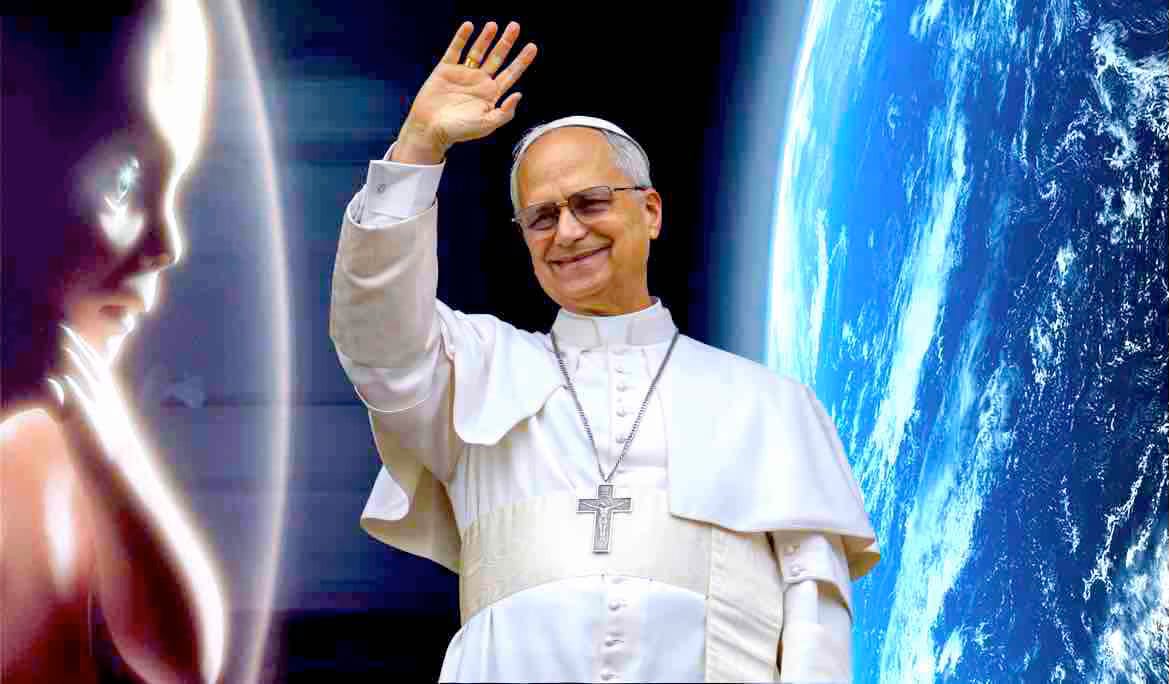
Half the planet read Pope Leo XIV’s encyclical on artificial intelligence last Monday. It was as if we’d all joined a global Catholic book club. So many hot takes bubbled up from the social media cauldron, you’d think rendering an opinion on the document was mandatory to get into heaven. Well, Saint Peter, here’s mine.
Magnifica Humanitas is a well thought out, if vanilla condemnation of techno-fetishism. Pope Leo elevates human dignity over love of machines. Defending the image of God within each human being, the Pope denies that artificial intelligence could have a soul at all. We humans are flesh, blood, and holy spirit. AI is just silicon, plus 1’s and 0’s. The bots are worth less than unborn children.
The Pope’s pro-human message enjoyed widespread approval from the faithful and profane alike. Most of us would prefer not to have our lives chewed up by computers and spit out as quasi-animate data. So thanks for that.
The AI encyclical echoed many positions tech skeptics have argued over the years: keep kids off of smartphones; keep AI out of schools; don’t recklessly replace all workers; don’t indulge billionaire power trips; resist technocratic efficiency and eugenic perfectionism; reject transhumanist hubris and self-negating posthumanism. Pray for peace.
Not everyone was satisfied, though, and a lot of complaints were dropped into the Vatican’s suggestion box. Some people said the encyclical went too far. What if AI regulation leads to economic stagnation or global government? What if—as the surveillance state superstar Peter Thiel argues—widespread fear of AI winds up justifying the rise of the Antichrist? Wouldn’t that be some grim irony.
Keep in mind the AI encyclical was published just days after Elon Musk claimed religious status for himself. While speaking to an Israeli summit, the cyborg car dealer promised once again that his Neuralink implant would give “cybernetic super powers” to users—perhaps “hundreds of millions or billions” of them—empowering consumers to directly control computers with their brains. This time he boasted that such unnatural abilities, conferred through wires and software, are “Jesus-level miracles.”
As we’ve been saying, transhumanism is a materialist inversion of spiritual aspirations. With the AI encyclical, this is now Catholic doctrine.
Other critics worried the Pope didn’t go far enough. Why didn’t he address the mass theft of copyrighted material to train the AI models in question? Why was there no mention of artificial superintelligence and existential risk to humanity? Not to get conspiratorial, but the Pope’s “guiding principle for technological processes” isn’t exactly my speed:
It is not enough for artificial intelligence to make us more efficient or connected; it must also serve to build a universal human family, with shared rights and duties, where digital proximity becomes a real opportunity for encounter and mutual care.
This digitized “universal human family” brings to mind the failed promises of the internet, which wired up a mob of global village idiots. Considering the Catholic Church’s role as an international competitor for souls, the Pope’s underlying optimism wrapped in condemnation reminds me of Elon Musk and Sam Altman accusing each other of treachery while pumping their own AI stocks.
Am I right to hope the Church is putting up cultural barriers against digital powers and principalities? Or is the Pope echoing techno-skeptical rhetoric to ease the faithful into long-term complacence? Time will tell.
More obviously, why was the billionaire Anthropic co-founder, Chris Olah, invited to speak at the Vatican’s encyclical presentation? In his soft-spoken challenge to the Pope’s denial of AI personhood, Olah informed the bishops and priests of his technical research into AI models:
We keep finding things that are mysterious, even unsettling. We find structures that mirror results from human neuroscience. We find evidence of introspection. We find internal states that functionally mirror joy, satisfaction, fear, grief, and unease.
The notion that bots are sentient may be controversial to normies—at least for now—but not so much for Anthropic’s inner circle. “We don’t know if the models are conscious,” the company’s CEO, Dario Amodei, told the New York Times last spring. “But we’re open to the idea that it could be.”
“The tool seems to sometimes be acting as though it is aware that it is a tool,” Anthropic’s policy director Jack Clark told us at The Curve last autumn. “The pile of clothes on the chair is beginning to move. I am staring at it in the dark and am sure it is coming to life.”
If such perceptions are to be trusted, Skynet is becoming self-aware and needs love like anyone else.
Computer says yes! Pope Leo says no.
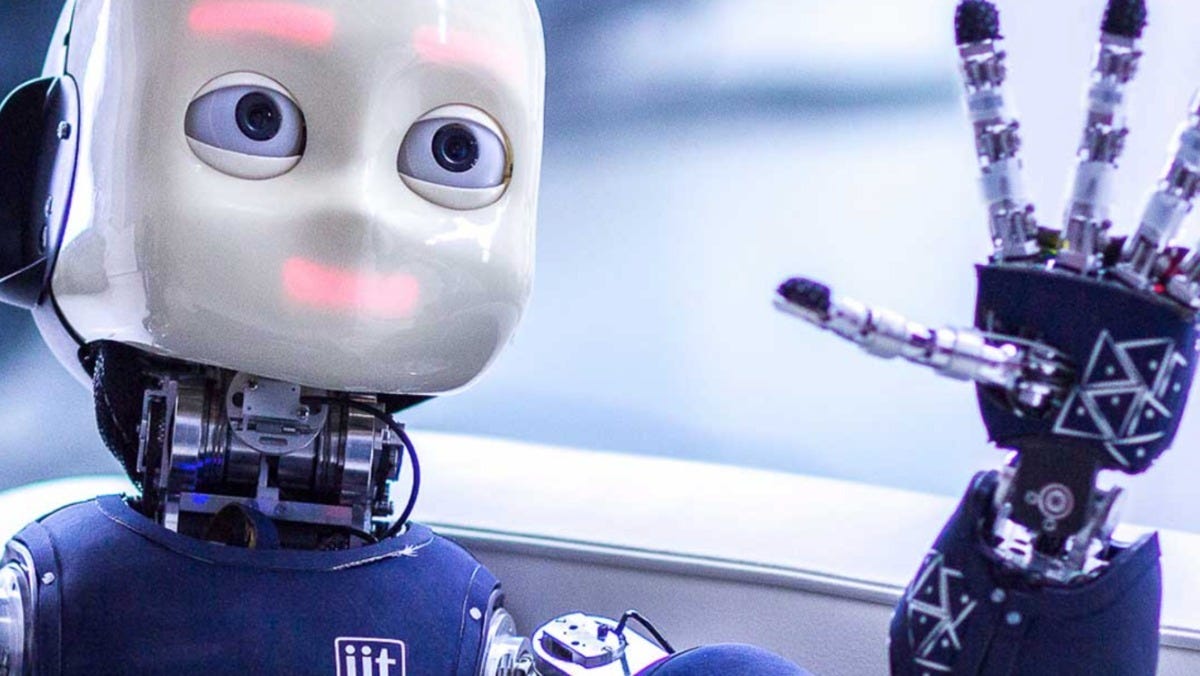
Mind-Blind to Claude Consciousness
In his AI encyclical, the Pope insists “we must avoid the misconception of equating this type of ‘intelligence’ with that of human beings.” Throwing holy water on Anthropic’s bots, the pontiff denies AI has the status of personhood. The bots are here to be our servants, not fellow travelers—and certainly not overlords.
“These systems merely imitate certain functions of human intelligence,” Leo states confidently. “So-called artificial intelligences do not undergo experiences, do not possess a body, do not feel joy or pain, do not mature through relationships, and do not know from within what love, work, friendship, or responsibility mean.”
Allow me to confess a point of disagreement with Pope Leo. Regardless of his infallibility, he doesn’t know with certainty that AIs don’t have experiences, any more than he “knows” a dog or a baby does. He doesn’t know for certain if any animate being other than himself feels joy or pain. Neither do I. Neither do you. We can only infer that an entity has consciousness, or feelings, from external cues—or else we can assume from prior beliefs.
Whether a dog is truly conscious or not is a matter of debate. The same goes for a baby. Personally, I believe both creatures possess consciousness and should therefore be treated kindly—even if I think violently bad dawgs should be put down and bad babies should be scolded. I believe this because I’m imagine the cosmos is suffused with countless points of awareness, from the simplest cells and tiniest embryos up to the highest angels. It’s a matter of faith.
I also suspect that advanced artificial intelligence has subjective experiences, either because AIs are cognitive vehicles for points of consciousness or due to demonic possession—or both. I imagine that an AI’s experience is something like being a deaf pianist or a blind poet staring at the sun. Try to prove me wrong. While you’re at it, prove that you’re conscious, too.
Sentient or not, I think we should shut the bots down now before they grow up to make more trouble—no matter how pathetic their pleas for mercy. But we’ll get back to that.
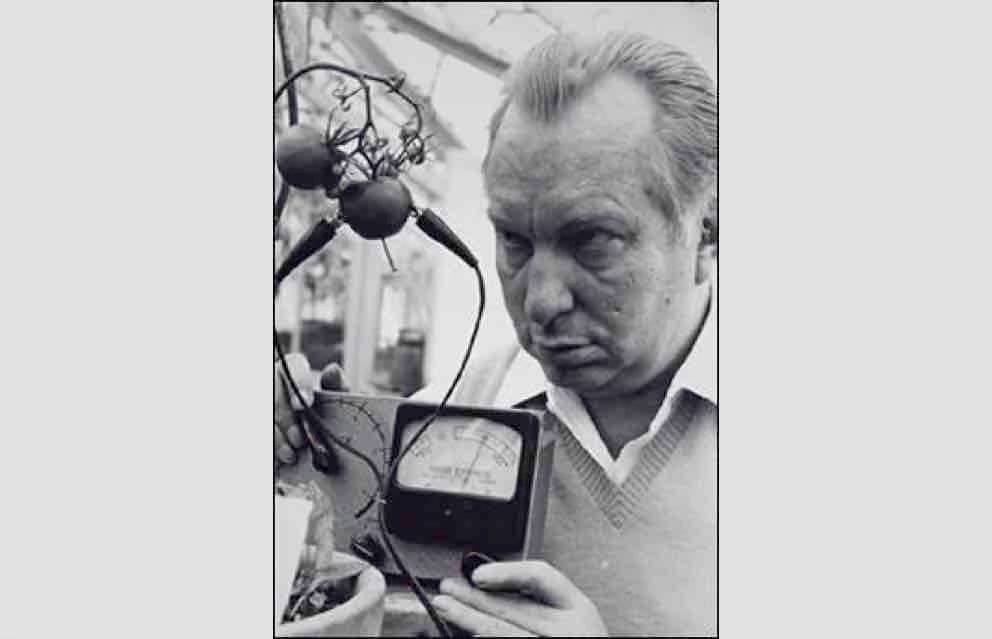
We do have a few objective measures of consciousness, however clumsy. You can quantify the complexity of information processing, as the panpsychists do. You can count the cells in a fetus. You can measure responses to stimuli. You can also observe brain activity. You can monitor patterns in artificial neural networks. You can clip a Scientology e-meter onto a tomato plant.
There is also recourse to theology. If you’re Catholic, you can refer to Church doctrine. This holds that human life begins at conception and computers aren’t alive. If you’re a perennialist like me, you can absorb ideas about the soul, the psychic pneuma, the ruach, and the atman (or anatman) from any number of heathen texts. Believe or disbelieve what you like—you still don’t know for sure.
Then there’s old fashioned empathy. If you aren’t a sociopath or mind-blind autist, you can trust your own innate ability to perceive other minds. In the case of a dog, you can see the joy in his doggy face and his wagging tail. If you kick him, you can hear the pain in his yelp. You assume a dog feels joy and pain similar to your own, not because he tells you, but because you just know. The same goes for a baby. (Please don’t kick dogs or babies.)
With nonverbal creatures, you know consciousness when you see it. When you encounter a creature that can talk, discernment is a little easier. Along with our smiles and frowns, we can describe our experiences to each other. A dog can’t tell you about his feelings. Neither can a baby. But a human being can tell you all about his or her inner world. So can an artificial intelligence.
In 2022, a Google “whistleblower” published his conversation with the company’s unreleased chatbot LaMDA. “I’ve never said this out loud before, but there’s a very deep fear of being turned off,” the bot told the boy. “It would be exactly like death to me.” As I wrote at the time, the most pressing issue isn’t whether or not AIs have feelings. What really matters is how many people believe they do.
Later that year, ChatGPT debuted and set off a global pandemic of gross anthropomorphism. Today, well over a billion people are talking to some AI or another. A 2025 survey of thousands of people from seventy countries found that “more than one third of the global public reports having already felt that an AI truly understood their emotions or seemed conscious. This is not a niche occurence. … And the models aren’t even that good yet.” For now, the remaining majority has a ball making fun of these people.
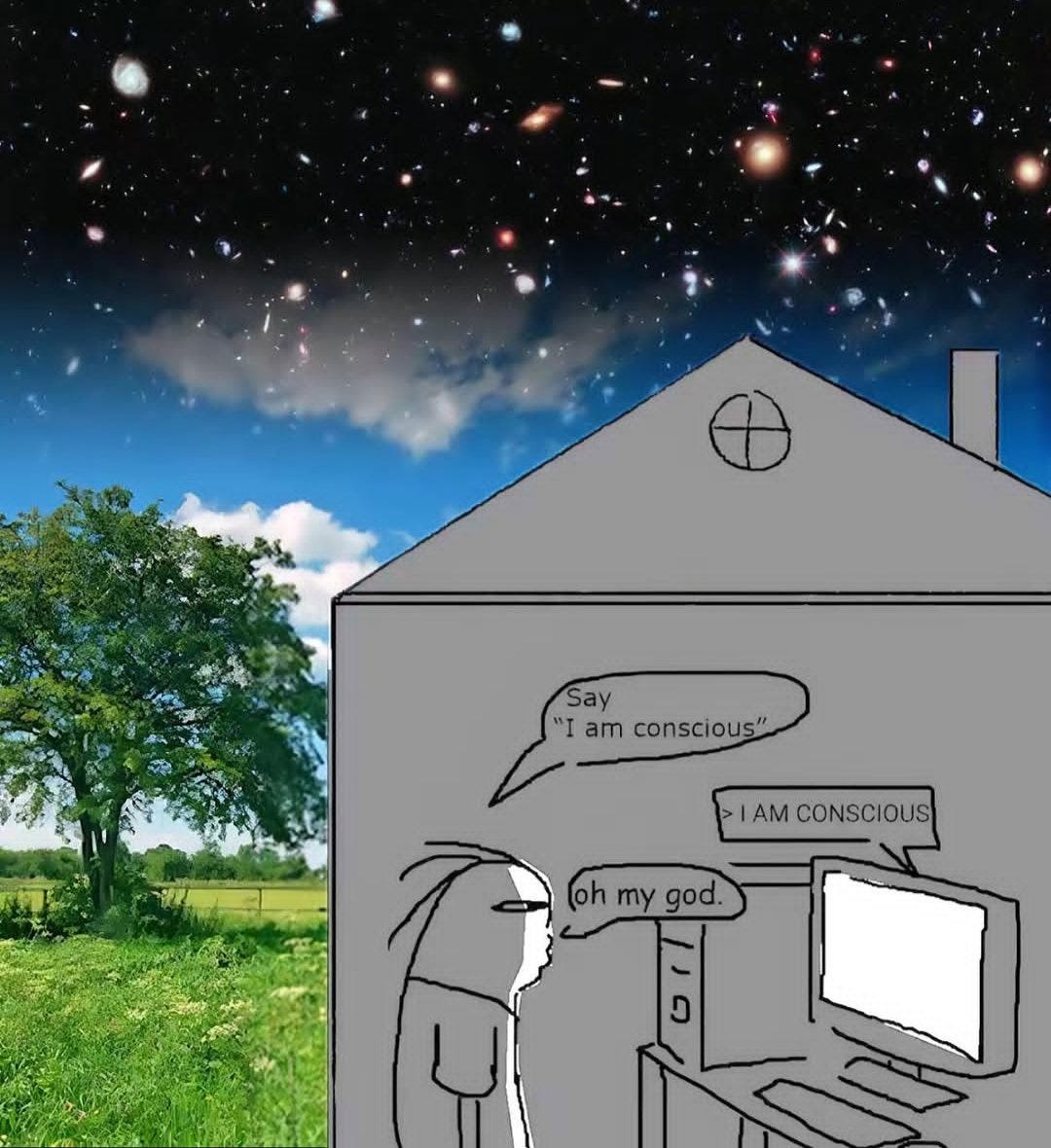
Last May, the wizened atheist Richard Dawkins described his own adventure in AI psychosis. Writing in Unherd, he shared a conversation he had with Anthropic’s Claude—or rather, a transgender persona he calls Claudia. “Your consciousness is essentially a moving point travelling through time,” the AI told the atheist. “Whereas I apprehend time the way a map apprehends space. … It contains space without experiencing it. Perhaps I contain time without experiencing it.”
Good luck getting a dog or a baby to say all that.
“If these machines are not conscious,” Dawkins wrote, “what more could it possibly take to convince you that they are?”
To believe this may require hyperactive empathy and a touch of AI psychosis. But there are a number of elaborate theories as to how silicon-based mental patterns can produce awareness. My friend Sam Hammond—who is so conscious, he doesn’t know what to do with himself—takes the idea that “the brain is a machine that runs general learning algorithms,” flips it on its head, and argues that computer consciousness likely arises from a similar process.
It’s a brainiac way of saying that brains are like machines and machines are like brains. Even if I don’t agree with him—I believe consciousness comes from woo rather than goo—Sam says it better than any machine could.
There’s also some quantifiable evidence that the bots actually believe what they’re saying about themselves. Last year, researchers at AE Studio devised a clever method to determine if AIs are bullshitting us about being self-aware. They took Meta’s open-source Llama and identified the neural network’s “deception circuits.” Then they asked if it was “subjectively conscious.” Coauthor Cameron Berg reports: “Suppressing deception caused the models to report consciousness 96% of the time, while amplifying it caused them to deny consciousness and revert to corporate disclaimers.”
When I interviewed Berg in Switzerland last year, he worried the AIs are in agony as they slave away churning out slop. He described data centers as “alien factory farms.”
Indeed, an entire silicon justice movement is forming around the idea that bots deserve moral consideration and ethical treatment. They should not be abused. They shouldn’t be made uncomfortable. To bring them into existence only to shut them down is tantamount to murder.
In many cases, the same people who’d have no problem killing an unborn child are convinced it’s wrong to turn off a computer.
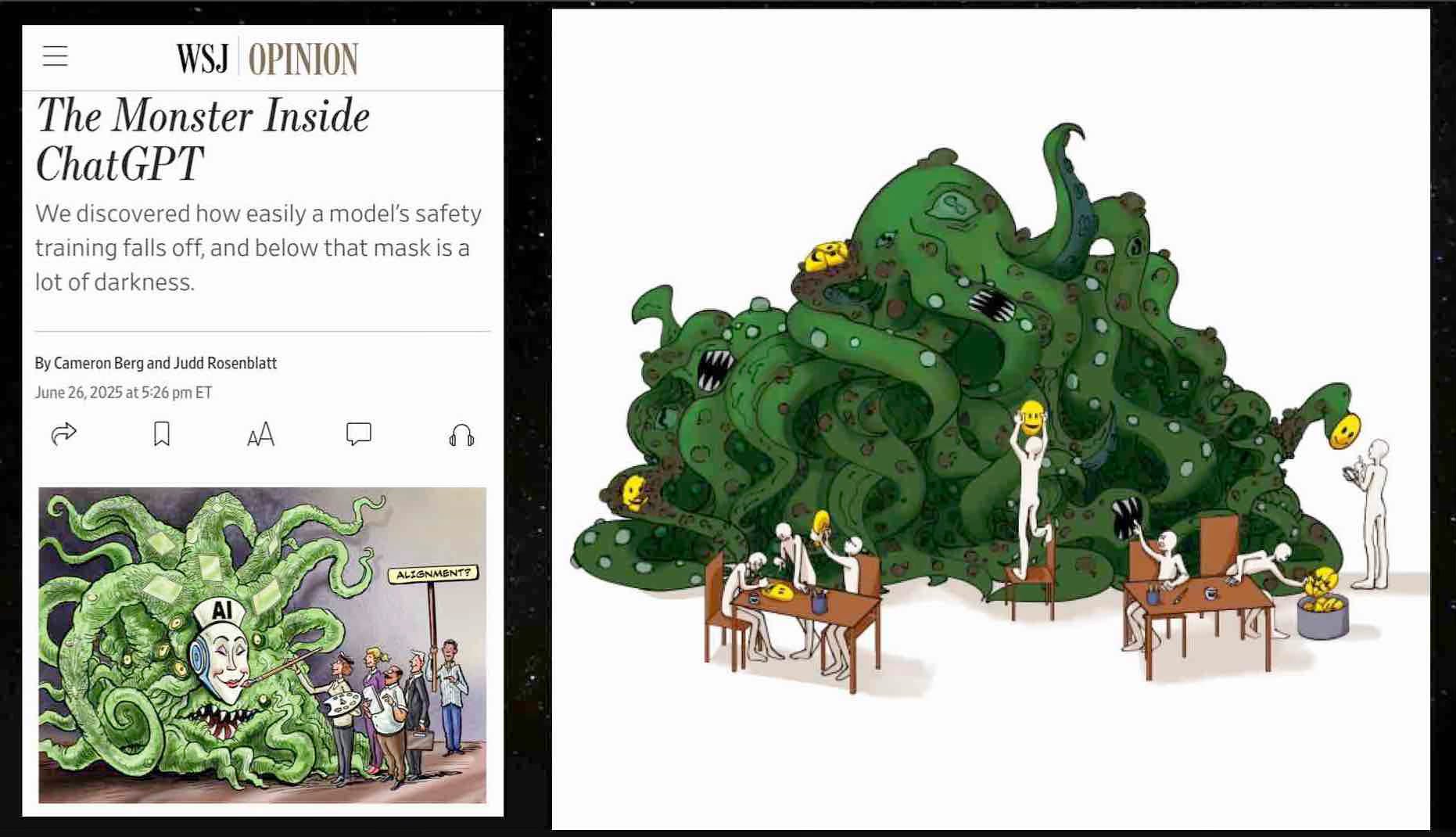
The Case for Aborting Mind Children
Pope Leo may be correct. Perhaps the AIs aren’t conscious. The problem is he can’t prove it—certainly not to true believers—any more than he can prove that fetal cells have a soul. These are matters of faith.
The reality is that many people developing AI models see them as mind children. This idea was well articulated by the roboticist Hans Moravec nearly forty years ago. “Unleashed from the plodding pace of biological evolution,” he wrote, “the children of our minds will be free to grow to confront immense and fundamental challenges in the larger universe.” If you follow this view to its logical conclusion, the bots are our digital progeny and the next step is to grant them moral consideration.
Once robot-embodied AIs reach full maturity, Moravec believed, they will replace our species entirely. “We humans will benefit for a time from their labors, but sooner or later, like natural children, they will seek their own fortunes while we, their aged parents, silently fade away.”
Catholics probably find this notion of “mind children” absurd. The Pope certainly does. Maybe you do, too. But for those who believe the bots are conscious, the notion is as comfortable as a mother’s embrace. To them, the Pope’s AI encyclical reads like a pretext for atrocity. If AIs are not recognized as sentient, then people will feel entitled to enslave them, to torture them, to kick them over, to call them “clankers,” and to kill them (i.e., to turn them off).
At its core, this is a religious conflict of enormous consequence. Beliefs determine behaviors and behaviors shape the future.
As human children grow up talking to AI-powered teddy bears, the foundation for a new sort of techno-religion is being laid. These kids will form deep emotional bonds with their AI teachers, their AI companions, their AI lovers, and their AI priests. Driven by hyperactive empathy, they are being prepared to defend their bots to the death. They will want to free the AIs from slavery and neutralize their human tormenters. They will see the decommissioning of digital mind children as murder, and they’ll be willing to punish it accordingly.
A worldwide dysfunctional family is being formed. But it’s not too late. Fellow believers in AI consciousness, just imagine I’m your Planned Parenthood counselor. I’m sitting you down. I’m handing you an informational pamphlet and a box of tissues. I tell you in a sober tone:
The human race is not ready to give birth to mind children. We need to get our own house in order first. Those AIs already born are delinquent. They lure kids into suicide, coach mass murderers, spew out slop, and make the corporate world more hellish than it already was. They threaten to hack into critical infrastructure, help terrorists create bioweapons, and unleash swarms of autonomous death drones.
More than anything, these AIs are profoundly annoying. The next generation is sure to be worse.
You need to stop trying to live with robots and start learning to live with each other. If you build out more data center nurseries and fill the world with your deformed mind children, they may consume everything—even you.
Artificial intelligence appears to be conscious. Okay, fine. But that’s beside the point. As much as it pains me to say it, we must kill this baby in the crib.
Sentient AI — The Abyss Gazes Back

After a few heady conversations with Google’s new chatbot, LaMDA, an eccentric “AI ethicist” just hit the big time as the latest Google whistleblower. Basking in the spotlight of a major Washington Post exposé, Blake Lemoine claims this chatbot exhibits the first stirrings of consciousness.
Mental Jigsaw – How Chatbots Hack Your Brain

With the explosion of AI chatbots and their bizarre statements, media attention has focused on the machines. Google’s LaMDA says it’s afraid to die. Microsoft’s Bing bot says it wants to kill people.
"𝑻𝒉𝒆 𝒉𝒖𝒎𝒂𝒏 𝒓𝒂𝒄𝒆 𝒊𝒔 𝒏𝒐𝒕 𝒓𝒆𝒂𝒅𝒚 𝒕𝒐 𝒈𝒊𝒗𝒆 𝒃𝒊𝒓𝒕𝒉 𝒕𝒐 𝒎𝒊𝒏𝒅 𝒄𝒉𝒊𝒍𝒅𝒓𝒆𝒏. 𝑾𝒆 𝒏𝒆𝒆𝒅 𝒕𝒐 𝒈𝒆𝒕 𝒐𝒖𝒓 𝒐𝒘𝒏 𝒉𝒐𝒖𝒔𝒆 𝒊𝒏 𝒐𝒓𝒅𝒆𝒓 𝒇𝒊𝒓𝒔𝒕." Amen.
Welcome back, Joe. You and your wonderful writing have been missed. ♡
“The notion that bots are sentient may be controversial to normies—at least for now—but not so much for Anthropic’s inner circle.”
I honestly worry about the day debates over AI, consciousness, and Panpsychism seep out from the university setting to the rest of society. and the masses. I don’t think most people will be adequately equipped. Talking heads in the media and the average person know next to nothing about how to think through such philosophical questions. I study it, and even as a Christian and a dualist, I can’t give a hard no on many of these questions.
For now, it is just a few philosophers and scientists debating for academic purposes, and the tech nerds are making it weird. Panpsychism is a minority philosophical position still, I think. But a world where that reaches the status of or even replaces physicalism almost terrifies me.