
Scan and Destroy
INSANE: Anthropic destroys old books!! | MUNDANE: Tech industry devours fresh brains

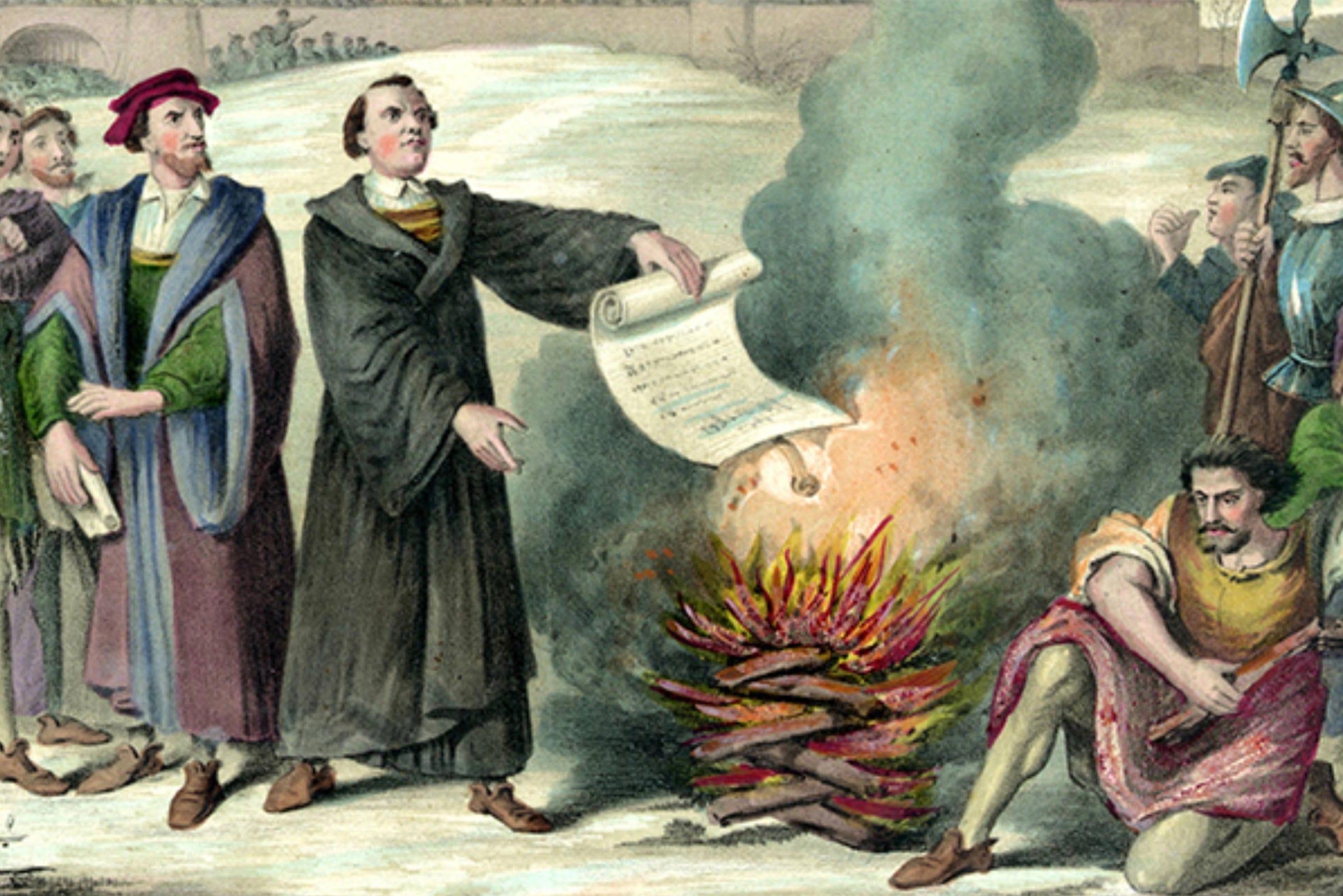
Book-lovers are furious at Anthropic for scanning and shredding countless old volumes. Their ravenous Beast Machine was hungry for aged memes, so the AI company harvested old-school language from a billion yellowing pages, uploaded them to use as training data, and then destroyed the brittle remains. Anthropic outsourced their literary holocaust—dubbed “Project Panama”—to a book-mulching company called IBSNdb, which specializes in transforming physical tomes into digital text.
This outrage serves as a small, concave mirror that reflects a much larger process. AI consumes culture on an industrial scale. It’s a form of memetic vampirism. Human artwork is sucked out of our collective neck, along with the uploaded details of our lives, our communications, our affinities and aversions, and quite often, our innermost thoughts. Vampire bots rake over all this data, remix it, reinterpret it, hallucinate a few novel details, then feed it back to us as memetic slop.
These AI vampires have been invited into our schools, medical facilities, global corporations, government agencies, military command centers, and most consequentially, into a billion smartphones, producing swarms of dead-eyed, bloodthirsty zombies shambling into the streets from their virtual graveyards.
The book-grinder uproar was kicked off by an in-depth investigation from Emanuel Maiberg, published at 404 Media last week. The details read like a dystopian pulp novel:
“The world’s best AI training data is sitting on a shelf,” ISBNdb, a company that produces what it claims is “the world’s largest book database,” and that offers high-volume book acquisition services for AI companies, says on its site. … ISBNdb explains that printed books published before 2022 are ideal for AI training data because they don’t include AI generated text.
Untainted books stave off the specter of “model collapse,” in which an AI’s training data is so saturated with AI slop, the model being trained basically goes insane. To avoid this, AI companies are feeding pre-slop books into their newest slop machines. They’re emptying bookshelves to make room for more server racks.
ISBNdb’s scan and destroy process reminds me of a crawfish boil, where diners pick through a pile of boiled mud-bugs, pluck them out one-by-one, twist their little heads off, suck the spicy juice out, free the meager meat from its shell, munch down the morsel, then pluck out the next one, again and again, transforming crawfish into human vitality and drunken conversation.
So it is with ISBNdb’s “destructive scanning.” Stacks of out-of-print books are fed into a hydraulic machine. Their title-inscribed spines are sliced off neatly. The freed pages are fed into another machine, scanned in rapid succession, then turned into pulp. As Maiberg reports, the company’s website waxes poetic about their recycling program. “It is the completion of a book’s life cycle: from tree to knowledge to tree again.”
They leave out the part where that uploaded knowledge is transformed into the lame, AI-infected books now cluttering Amazon search results.
Aside from its efficiency, this brutal process allowed Anthropic to circumvent an impromptu loophole in copyright law. As reported in the Washington Post last January, a federal judge ruled that destructive scanning didn’t replicate copyrighted material illegally. According to the Honorable William Alsup, AI companies were just “transforming” each physical copy into a single digital copy. They merely used the resulting data as if they were teachers “training school children to write well.”
No reasonable person would buy that shit, so ISBNdb offers its customers total anonymity through non-disclosure agreements. That policy worked pretty well, until Anthropic got hauled into court and sued for stealing people’s intellectual property en masse.
“The optics problem is real,” ISBNdb correctly states on its site, as proven by the hate being heaped on Anthropic. “‘AI company destroys two million books’ is not a headline that generates sympathy.”
The same should hold true for “AI company destroys two million jobs” or “AI company destroys a hundred million brains,” but people still insist the AI industry’s ongoing civilizational hack-a-thon is for our own good.
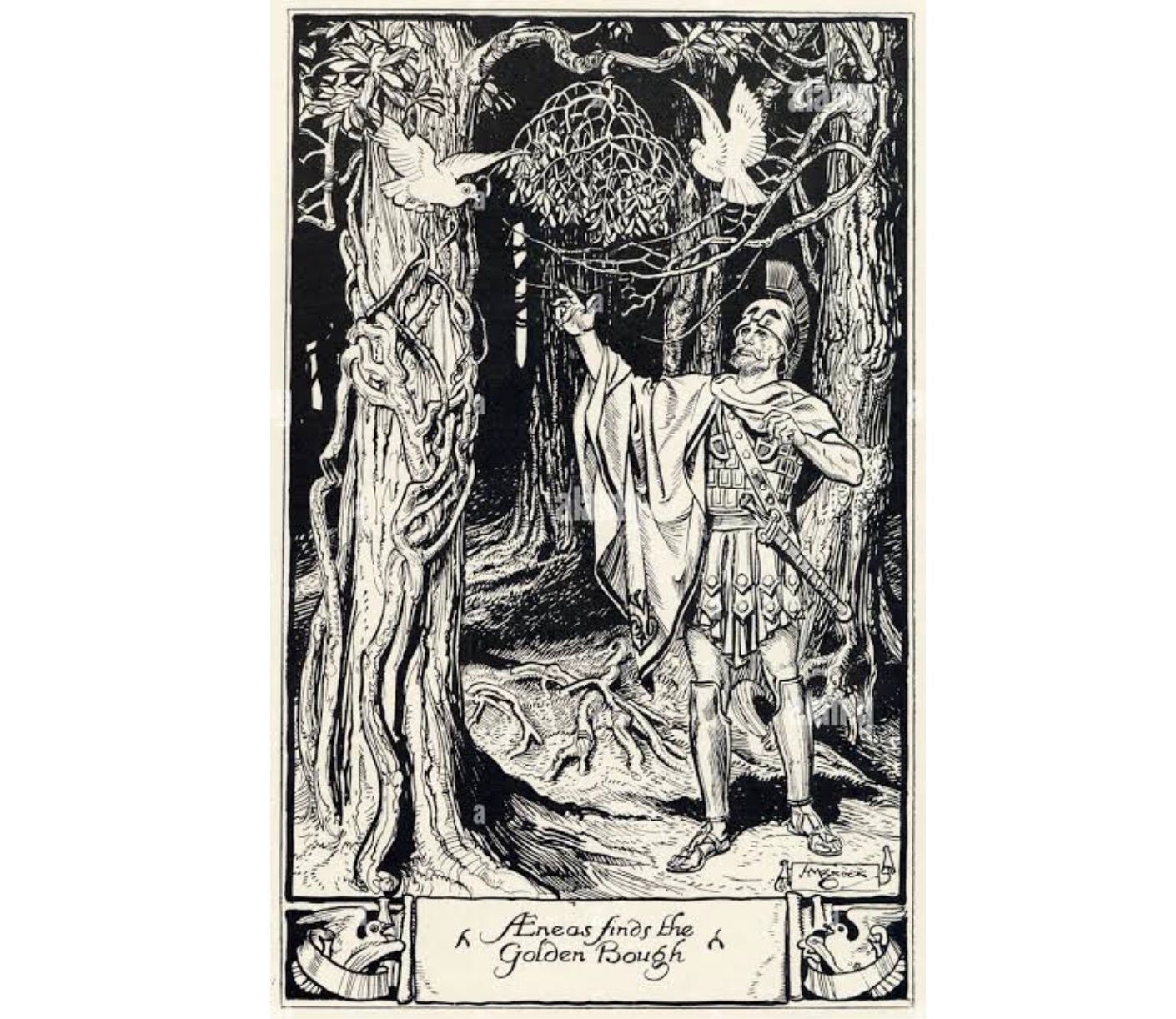
There is no running list of the books destroyed, so we’re left to guess. Some morbid part of me imagines that a first edition copy of J. G. Frazer’s definitive, if somewhat imaginative 1890 classic The Golden Bough was among those scanned and shredded in this mass sacrifice. Conceptually, destructive scanning is like the pagan King Kill rite that Frazer described, where an aging divine ruler would be dragged off his throne and ritually murdered so his life force could be preserved.
“The man-god must be killed as soon as he shows symptoms that his powers are beginning to fail,” Frazer wrote, “and his soul must be transferred to a vigorous successor before it has been seriously impaired by the threatened decay.”
The archaic King Kill rationale is a precursor to Information Age concepts such as data decay, substrate independence, and mind-uploading. In any closed system, the data will tend to decay over time. But because patterns of information are independent of the underlying substrate, the same memories and cognitive algorithms that exist in your brain can be transferred to a book. And the same memories and cognitive algorithms that exist in a book can be animated in a computer.
The ancients called such memories and cognitive algorithms “the soul,” whether expressed in the body or on the page. Transhumanists prefer to call the soul an “informational pattern” in the brain, or a “brain emulation” in silicon. If the substrate is less important than the pattern, why cling to the substrate? The message transcends the medium.
The fact is those books are getting old. The letters are fading. Their pages are deteriorating. Why not transfer that valuable information to a more durable substrate? Why not use a digital copy to train a brand new artificial intelligence? Then you can use that AI to read books for you and save the effort.
Time is slipping away. No sense in wasting yours on reading.
The hard truth is that memories fade. In the end, your precious library is fated to become a pile of moldy pulp. So is your brain. No need to be sentimental about either of them. As long as we can keep the data centers powered up, any digital copies you make of your books—or yourself—are practically immortal.
By this logic, the proper course is clear. Upload your books. Upload your soul! Upload your entire civilization!! Kill the king before his mojo dissipates.
I’m a sentimental man who prefers to read books on paper. My shelves are lined with them. My desk is flanked by stacks of them. Even the trashiest is a treasure. And as a sentimental man, I prefer to keep my soul—or at least the deepest parts—held fast in what’s left of my brain. Yet here I am, typing into the digital void. So glad you could join me here!
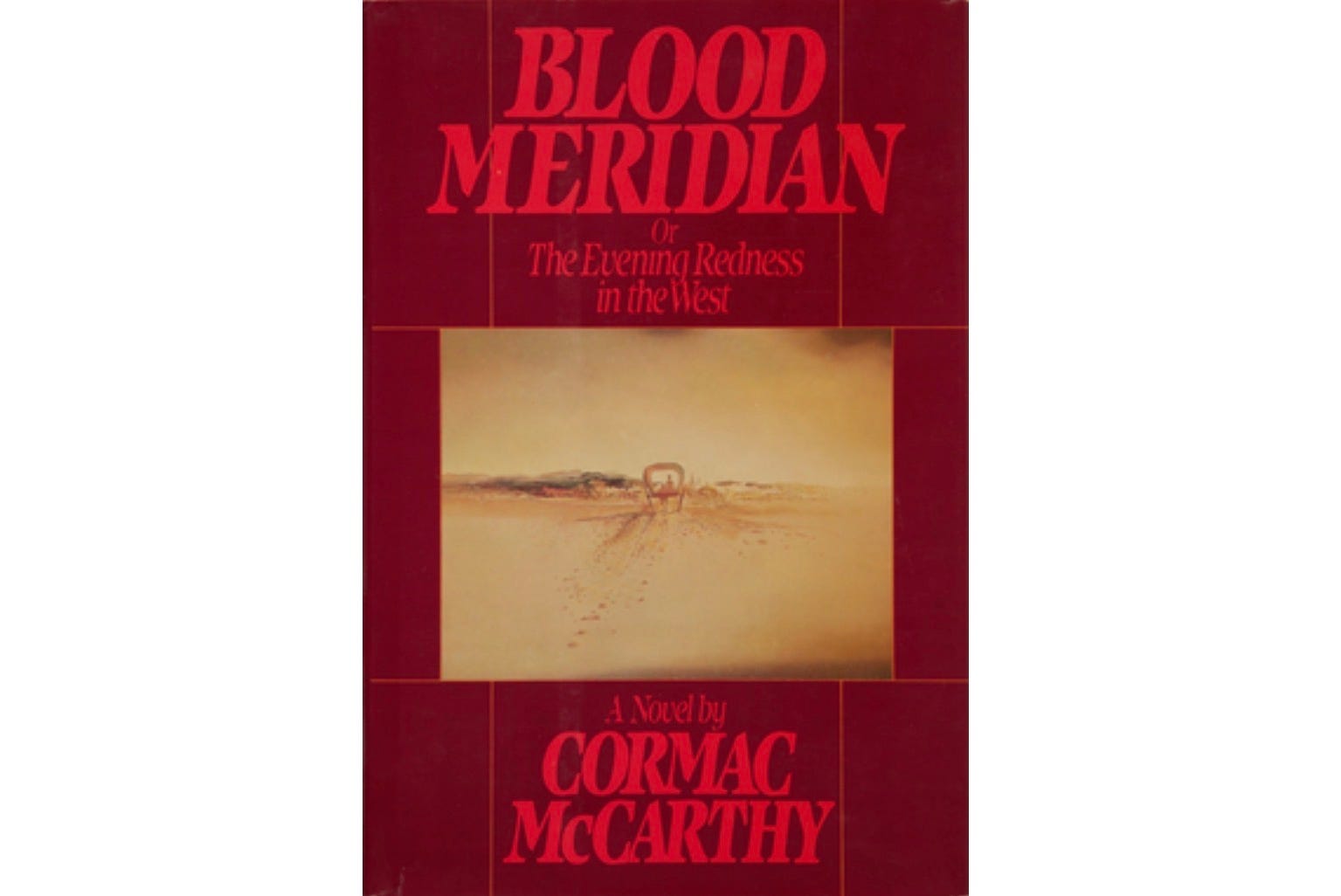
The entire enterprise of mass data extraction, book-mulching, AI training, cultural hybridization, and human replacement brings to mind Judge Holden from Cormac McCarthy’s 1985 historical novel Blood Meridian. It’s the tale of a multiracial cowboy gang that roams the western plains, raping and pillaging and collecting Injun scalps and raising hell.
The first time I saw the book, it was in the tender hands of a Brooklyn hipster sitting across from me on the subway. He read each page intently, displaying the cover for all to see, twirling his waxed handlebar mustache with deep self-satisfaction. Perhaps he imagined himself as the main character and New York as the Wild West, where the kid collected craft beer bottles as if they were Comanche scalps.
As the novel unfolds, you realize Judge Holden is both real and symbolic. In my interpretation, he represents the ravenous nature of the cosmos as embodied in human arrogance and treachery. “In such games as have for their stake the annihilation of the defeated the decisions are quite clear,” the judge explained with no need of commas. “War is the ultimate game because war is at last a forcing of the unity of existence. War is god.”
In one chilling motif, McCarthy’s ragged cowboy gang is camped near “the ruins of an older culture deep in the stone mountains.” It was a cliff-dwelling culture, perhaps the Anasazi. The judge crept through the ruins, gathering various artifacts left behind. He took these to camp, spread them out in front of the fire along with an old piece of armor, and began drawing them.
“In his lap he held the leather ledgerbook,” writes McCarthy, “and he took up each piece, flint or potsherd or tool of bone, and deftly sketched it into the book. … His fingers traced the impression of old willow wicker on a piece of pottery clay and he put this into his book with nice shadings, an economy of pencil strokes.”
In the judge’s sinister art, we find a fitting symbol for the ravenous cosmic force in man, now given over to quantification and virtual reality:
Lastly he set before him the footpiece from a suit of armor hammered out in a shop in Toledo three centuries before, a small steel tapadero frail and shelled with rot. This the judge sketched in profile and in perspective, citing the dimensions in his neat script, making marginal notes. …
When he had done he took up the little footguard and turned it in his hand and studied it again and then he crushed it into a ball of foil and pitched it into the fire. He gathered up the other artifacts and cast them also into the fire. … Then he sat with his hands cupped in his lap and he seemed much satisfied with the world, as if his counsel had been sought at its creation.
A Tennessean named Webster had been watching him and he asked the judge what he aimed to do with those notes and sketches and the judge smiled and said that it was his intention to expunge them from the memory of man. Webster smiled and the judge laughed. Webster regarded him with one eye asquint and he said: Well you’ve been a draftsman somewheres and them pictures is like enough the things themselves. But no man can put all the world in a book. No more than everthing drawed in a book is so.
Much like the Injun artifacts, our culture—or what’s left of it—is being sketched in silicon and tossed into the fire. As a sentimental man, I have faith that the immortal souls moving through our teetering culture will endure long after this mass transformation has passed. It’s a comforting conviction, because every uploaded page is kindling a civilizational bonfire and the flames are licking our heels.
Those who control the present control the last. Those who control the past control the future. Control the media and you control the mind.
Once everything is digital, they will be able to edit and twist any book into anything they want anytime they want. Which they will at will because on the throne of the world any absuridity can become "fact".
This AI madness is the memoryhole and 1984's history rewiriting mechanism in super ultra mega overdrive. And they know it and they are doing it anyway.
Got God? You'll need Him.
"While everyone is distracted, this thing is unfolding in the background. And if we are not careful it is going to wipe us all out." —DWave CEO on AI, 2011
Thanks for this article, Joe.
The destruction of old books makes me livid. What next? Go to all the art museums scan the painting then shred them? The destruction of old books is a crime against humanity. Fragile old books and documents should be physically photo scanned and copied onto archival paper. At least that would be a check sum of anything uploaded. Anthropic and any other AI companies that do destructive scanning should be held financially and criminally responsibly for what they have done. Unlimited liability!
All my life I have collected and saved books. Old science fiction, and all manner of subjects. I have the 2 volume set of The Viking Age by Paul B. Du Chaillu Published in 1889. To this day it is the best source of collected information of the culture and life of the Nordic people, the illustration of the rune stones both old and newer runes. Illustrations of grave finds. Marriage traditions and, laws. It even has information on where Valhalla supposedly was located. The gods the creation of the world the creation of humans. These books are a treasure.
I also buy physical books of many modern books because I can see them disappear with the political whims of the times. I save important substacks as PDFs which I move to expansion drive off my computer because computers fail and one can lose all your files. Faraday bags are a good idea to put back up drives in. Don't forget digital pictures we take with our cameras.
The reality of AI and the digital storage is that if our wars continue all it will take is exchanges of EMPs from space to eliminate all the AIs and data storage. Probably the Military ones will be hardened, but the art, literature, and history probably will be lost.